


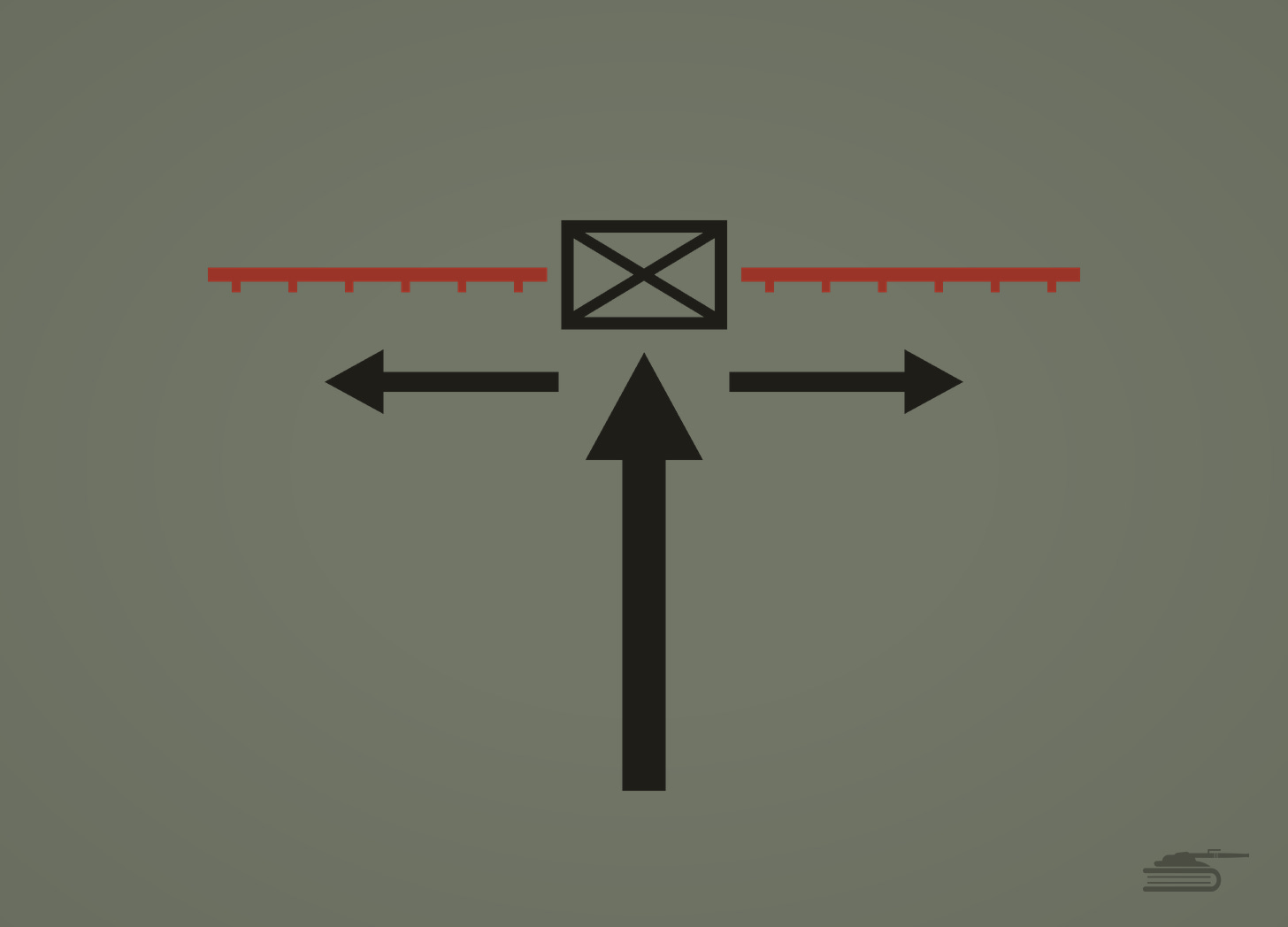
The foothold: one point in the enemy line taken and held, forces flowing in behind it, control expanding outward.
Summary
Don’t commit too many resources before you’ve established a foothold.
Send the fewest people who can take it, and have everyone else ready to flow in behind them the moment it holds.
The same process launches a product: identify the problem, study the competition, land a minimum viable product, then flow resources into it to expand.
WAR
Imagine that you are a Marine squad leader with eleven infantry Marines reporting to you. Your entire squad is in a trench with good cover and minimal risk from gunfire. Your next task is to take a trench 75 yards away, across open ground, held by the enemy.
What would your approach be?
In the infantry, the solution is to gain a foothold in the next trench and then expand it.
A foothold is a small area in enemy territory under your control. At the micro level it could be part of a trench or a room in a building. At the macro level it could be an airport or a beachhead. The enemy controls the rest of the area, but once you have a foothold, you can start expanding. I’ll use the trench for the examples here; the process is the same at every scale.
The foothold process
To gain a foothold you need to:
Identify the weak point you want to penetrate.
Suppress the enemy to isolate that point, so your troops can move to it safely.
Send the minimum number of people needed to gain an initial foothold.
Quickly flow forces in to expand it.
The process is to mass as much support as possible on a single point to allow a breakthrough, then expand the breakthrough by flowing resources into it.
Identify a point and suppress it
First you identify the best point in the enemy defenses to penetrate: ideally close to you and not well defended. Once that point is identified and communicated, you work to isolate it from the rest of the enemy.
To isolate the penetration point, you coordinate as much firepower as possible onto the enemy guarding it. That fire forces their heads down, so they can’t effectively shoot at the troops moving to take the foothold.
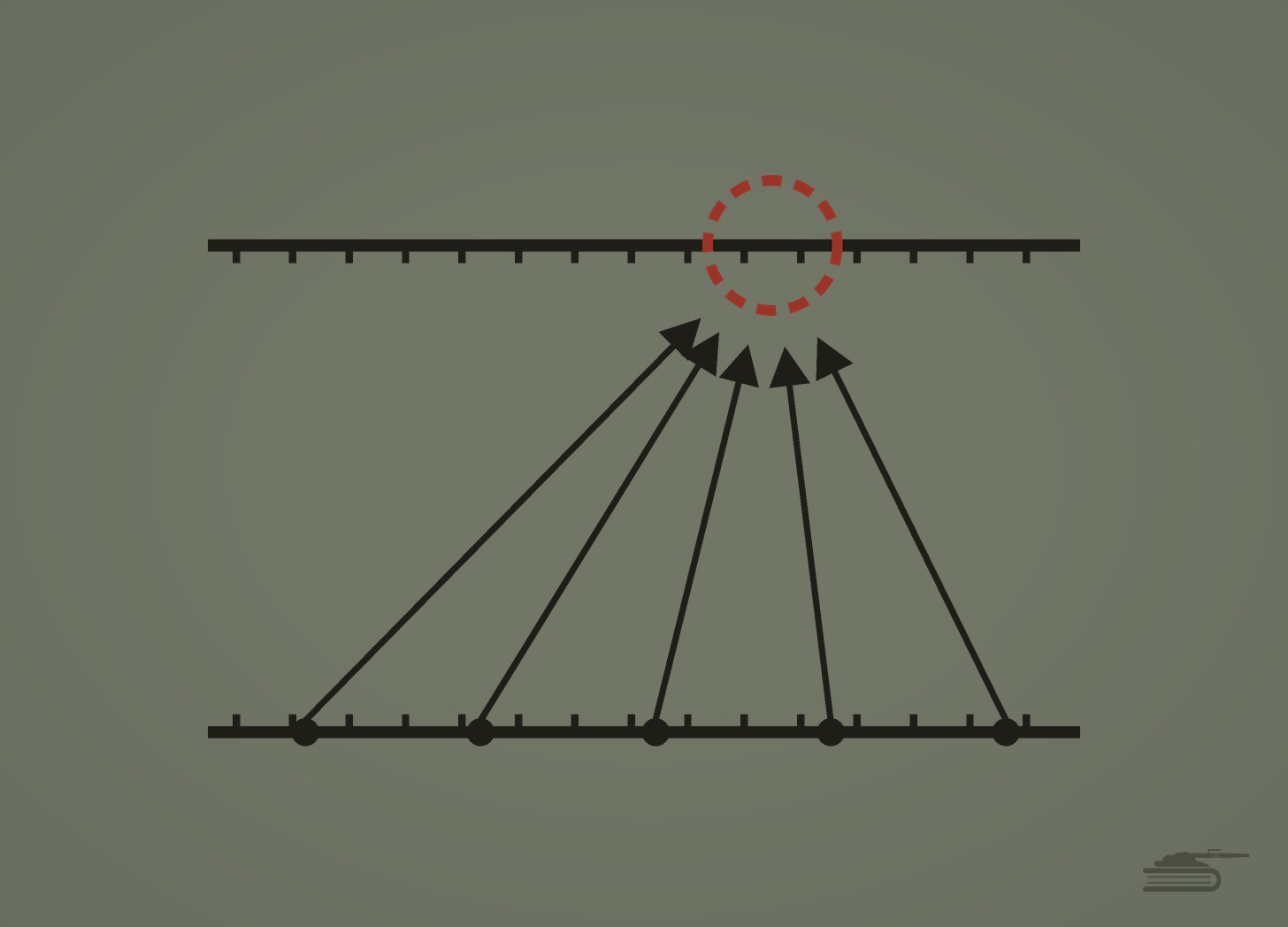
Identify the point and isolate it: every weapon in the squad converges on one spot in the enemy trench, so the enemy there can’t lift their heads.
Bringing all of your firepower onto one location usually means reorganizing and reorienting your troops. That takes direct leadership and communication to get everyone’s weapons pointed at the right spot — and everyone has to know when to start suppressing, so it lines up with the movement of the troops taking the foothold.
Imagine literally walking through the trench telling your squad where the penetration point is, who will suppress the enemy to isolate it, when they need to start, and who will make the first rush.
Gain the foothold
With the point identified and isolated by suppression, it’s time to take it. Infantrymen have to move across the open ground and physically take a small piece of the trench — enough space that more people and resources can flow into it and start expanding your control.
Sending the correct number of people is a critical decision. Send too many and they could all get wounded or killed before they reach the trench. Send too few and they may not have enough firepower to actually take the foothold once they get there.
Ideally you send the fewest people who can establish the foothold. That number is a judgment call by the leader on the ground. Two? Four? Six? Getting it right takes experience and an honest analysis of the tactical situation.
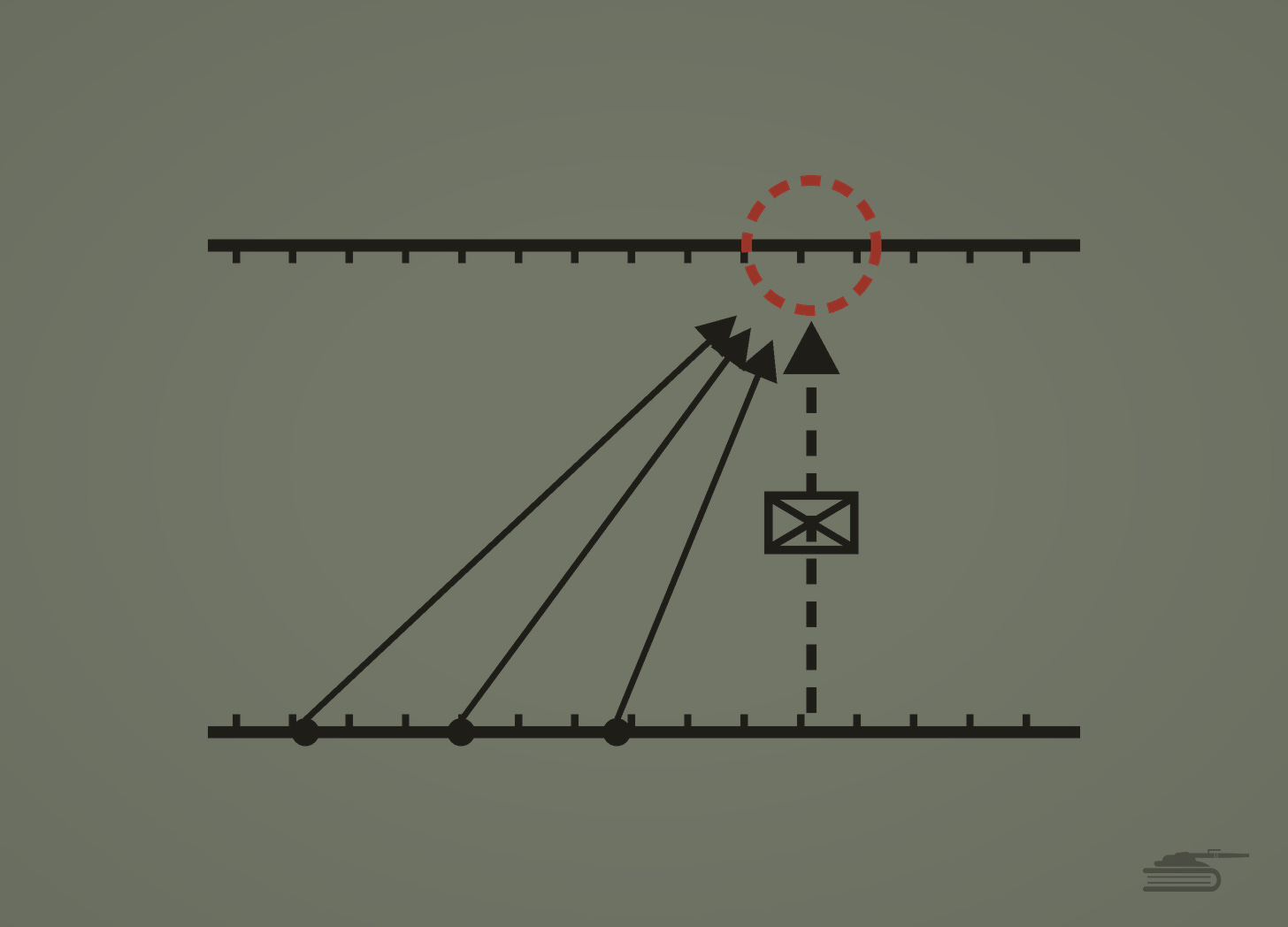
Gain the foothold: a buddy pair crosses the open ground while the rest of the squad keeps the point suppressed. The fewest people exposed who can still take it.
Continuing the trench example: after your analysis, you decide on two infantrymen, followed quickly by two more — four to gain the foothold. If all four are wounded or killed, you can still execute the mission. If they get there safely, they have enough firepower to take part of the trench.
Once the foothold is taken, you start flowing resources into it.
Flow of forces
To flow forces is to send people and resources into the foothold to fortify it, then to expand it. Because you sent the fewest people possible, they can’t hold that position long without support — the enemy will counterattack quickly to throw them out. It is critical to have resources prepared to move the moment the foothold is established.
Speed is everything here. Have people and assets standing by, ready to reinforce as soon as it’s clear the foothold holds. If you are not prepared to push resources into the foothold, you should not commit to taking it.
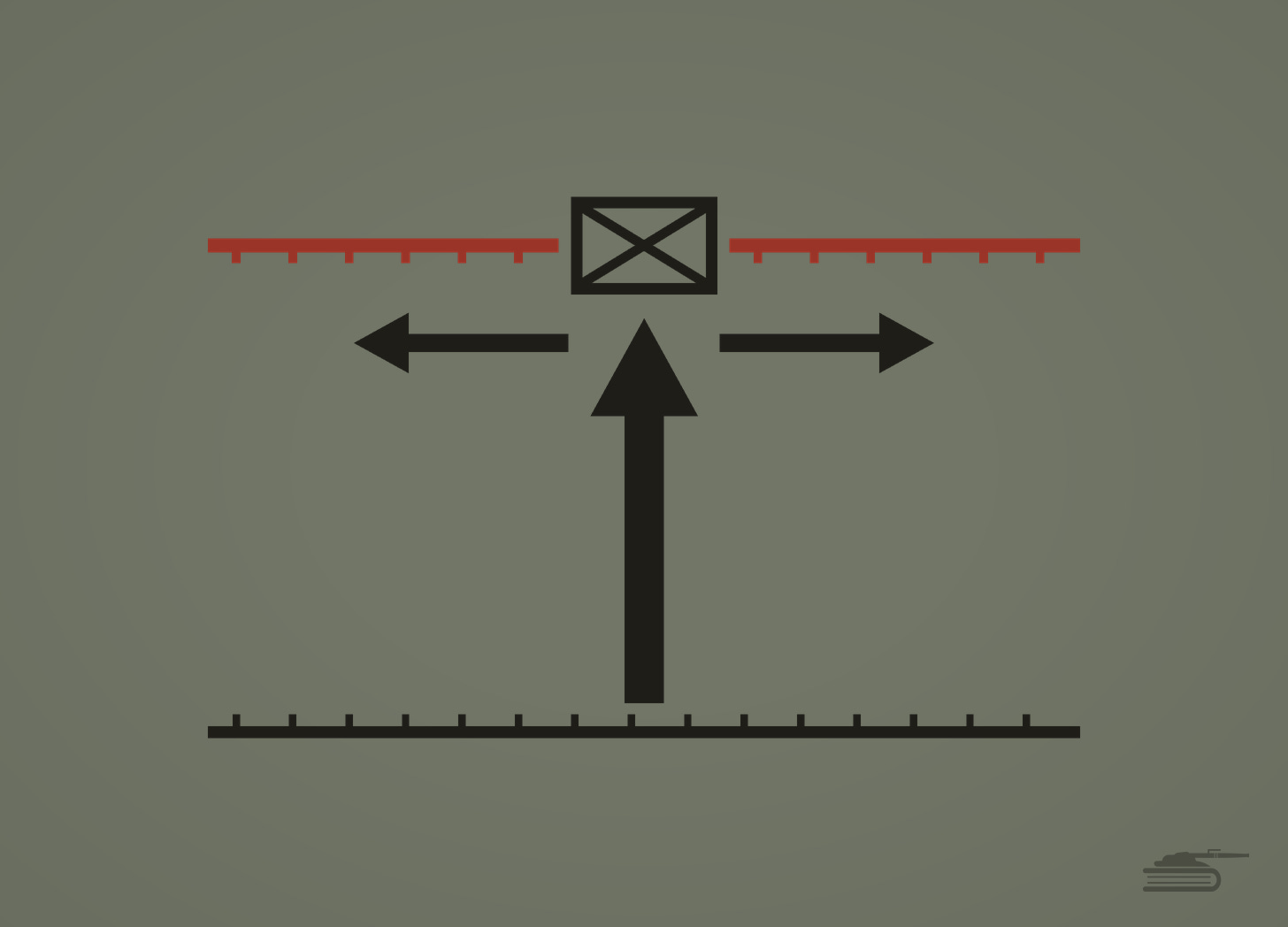
Flow of forces: the foothold holds, the squad floods in behind it, and control expands along the trench in both directions.
The purpose of the flow is to fortify the foothold and set up the next expansion.
Keep expanding control
With the foothold fortified, you have enough people to keep it secure and start clearing the rest of the trench. Once the trench is completely clear, the objective is secure — and you repeat the entire process for the next trench you’re tasked with.
The foothold process is a methodical way to take key terrain from the enemy. It is used at the smallest level to take a room or a trench, and at the largest level in an invasion, taking entire islands.
BUSINESS
The process that gains a foothold in combat is the same one a company uses to enter a new market — a new region, a new customer segment, a new product line. Most companies get the first step right and the other three wrong.
Identify the point. You don’t attack the whole market. You find the one segment that is close to what you already do and not well defended: a region where the incumbents are stretched thin, a customer type they treat as an afterthought, a problem they solve badly. Close, because your existing capability has to reach it. Weakly held, because your first team will be small.
Suppress. In the trench, the rest of the squad’s job is to keep the enemy’s heads down while two Marines cross the open ground. In business, the rest of the company’s job is to clear the path for the team making the move — and that means decisions made before they go, not after: pricing approved, the contract template ready, operations briefed, the leader’s calendar open. A pilot team that has to fight its own company for support while it fights the market is two Marines in the open with nobody suppressing.
Send the minimum. The pilot is the buddy pair. One salesperson in the new region, not a regional office. One customer segment, not a product line. The judgment call is the squad leader’s exactly: enough capability to actually win the first customers, few enough that losing them doesn’t hurt the company. Most new-market failures are a whole squad sent across the open ground — a full team, a lease, a campaign — before anyone knew the ground could be crossed.
Flow forces. This is where business most often fails the doctrine. The pilot lands its first customers and then waits — for the budget cycle, for the next hire, for a decision. Meanwhile the incumbents, who ignored a one-person pilot, notice a competitor with customers and respond. That’s the counterattack, and the moment you land is the moment you’re weakest. So the rule from the trench applies without translation: stage the reinforcements before the pilot goes. The second hire identified. The ad budget approved, contingent on the first ten customers. The delivery capacity ready. If you can’t commit to flowing resources once the foothold holds, don’t take the foothold.
Expand. Fortify the first segment until it’s secure — repeatable sales, delivery that holds under load — then repeat the whole process for the next adjacent segment. Not the whole market. The next trench.
Key takeaways
Launching a new product or business follows the same principles as taking a trench. The questions to ask:
Where exactly are we going to focus our limited resources?
What is the right amount of resources to attack this problem with? You don’t want to over- or under-commit, and that judgment comes from experience and detailed planning.
If we get something established, can we commit more resources to keep gaining ground? If not, don’t take the foothold.
The principles of war and business are the same.
References
United States Marine Corps. MCRP 3-10A.4, Marine Rifle Squad. Link
United States Marine Corps, The Basic School. “Rifle Squad Tactics” (student handout B2F0327XQ). Link