


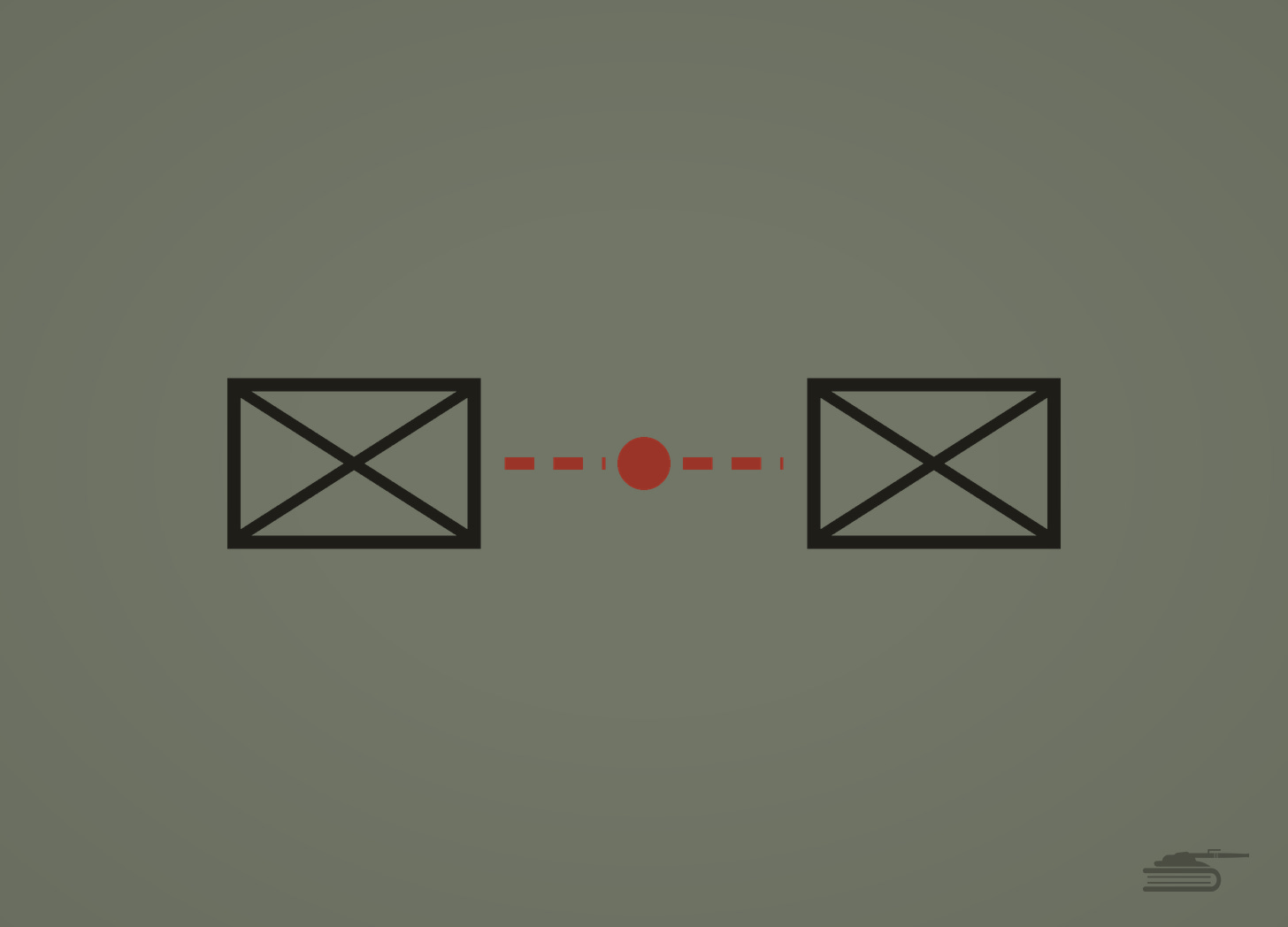
A connecting file: a deliberate point of contact between two units, so critical messages move even when everything else fails.
Summary
The most reliable communication is in person: one leader looks another in the eye, delivers the message, and hears it repeated back.
A connecting file is a planned point of direct contact between two teams, used to confirm that conditions are set.
Communicate at milestones, leader to leader, in the smallest group possible — and cancel the standing status meetings.
WAR
Imagine that you are the commander of a 40-Marine platoon. Your platoon’s mission is to destroy the enemy on a key hill — the first objective. The second objective is a radio tower that will be attacked by a different platoon. That platoon will execute only after you signal that your attack succeeded.
Your Marines attack the hill. When you reach the top, there are dozens of dead enemy fighters. Two of your Marines were killed in action and four were wounded. You are out of breath and barely able to think, and your Marines must set in 180-degree security facing enemy territory.
Now you need to signal the other platoon, or they won’t move. Between heavy breaths, you call them on the radio to start their attack on the tower. No response. You try again. No response. You throw a red smoke grenade — but you’re pretty sure they can’t see it from their position.
What do you do next? There are a million things you could do. None of them are fun.
This situation is the genesis of the connecting file. In battle, the speed and reliability of communication is the difference between life and death.
A connecting file is a deliberate point where two separate units stay close enough to pass critical messages by voice or by sight. The farthest Marine on one unit’s flank can physically see or hear the nearest Marine of the next unit.
Now imagine that in the same attack, you had placed a Marine in position to keep visual or audible contact with the platoon at the tower. When the conditions were set for their attack, that Marine literally yells at them, or gives a physical signal, and their attack begins. That is a connecting file.
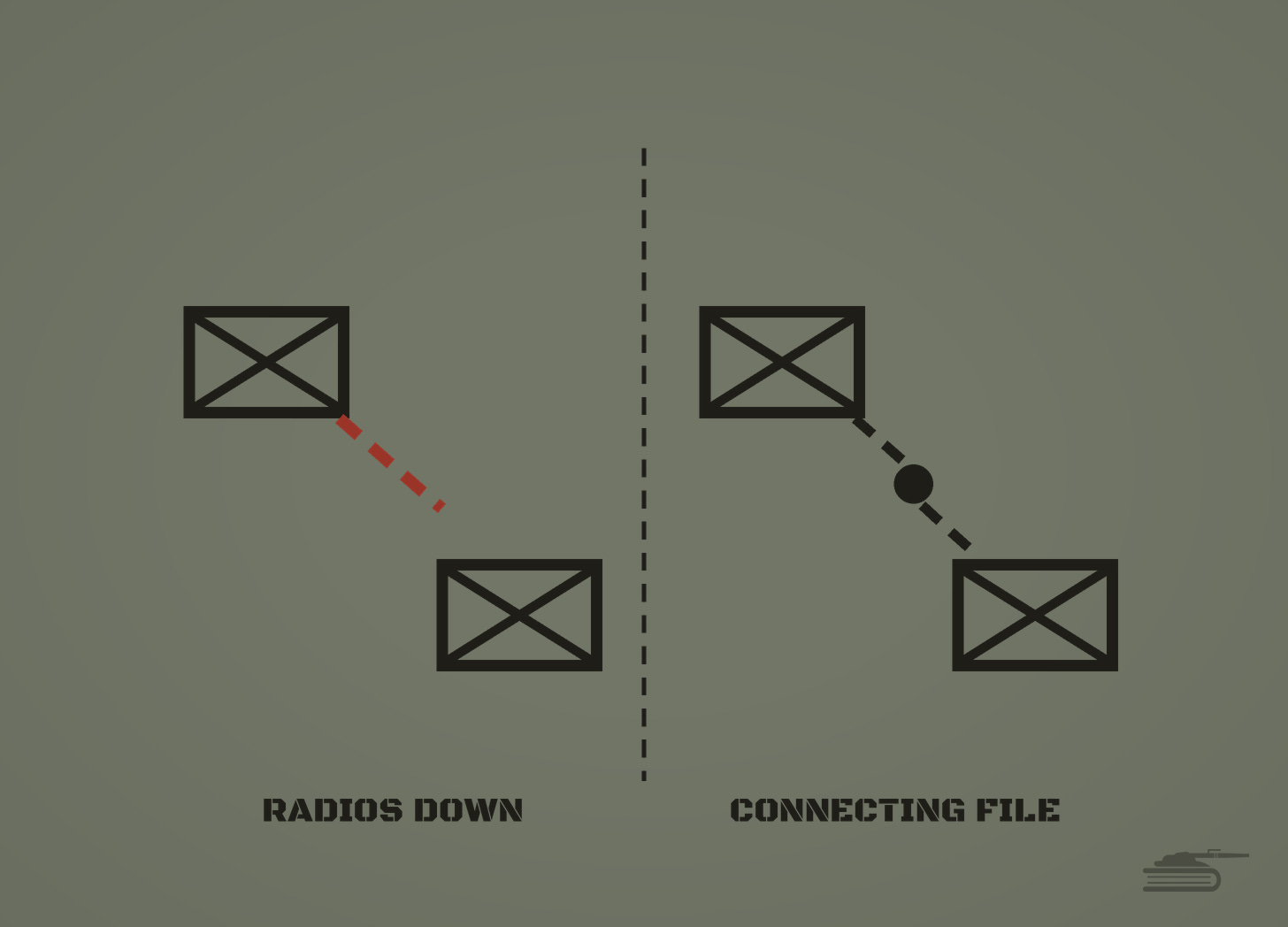
Left: the radios are down and the message dies en route. Right: a Marine placed between the units carries it the rest of the way.
In the infantry, we always plan a primary, secondary, and tertiary means of communication — and we’ll often use all three, even when the primary seems to have worked. We communicate with radios, hand-and-arm signals, yelling, smoke, pyro (like small fireworks), flags, and whistles: whatever gets people’s attention. As long as you aren’t confusing anyone or stepping on other traffic, more communication is better, because the intention is always to increase reliability.
The question quickly becomes: what is the most reliable form of communication?
The answer: a Marine with a message.
The situation in battle is constantly changing, and passing updated information is vital for success. A connecting file lets leaders pass information without radios. When radios fail, a Marine with a message will deliver. Reliability is king.
Challenges of a connecting file
A connecting file has real costs. First, it takes considerable physical coordination to keep two units in contact: one unit may be moving faster in the attack than the other, or the terrain and vegetation may be so thick that staying connected is hard. The leaders of both units have to work at it.
Second, the leader has to brief the message to another Marine well enough that it passes through the file accurately. That Marine has to understand the plan and be an effective communicator. All of it takes more time and effort from everyone involved.
In general, a connecting file costs more than a simple radio call. What you buy with that effort is reliability — and in both battle and business, reliable communication wins the day.
Benefits of a connecting file
The main benefit is reliability. Passing a critical message from key leader to key leader is the ideal; every other means is a downgrade, and every downgrade dilutes the message. Pass it over the radio, and it gets diluted. Send an email instead of making the call, and it gets diluted. Route it through too many people, and it gets diluted. Skip having the person say it back to you, and it gets diluted. The list is endless.
The connecting file is the least diluted battlefield communication the infantry has.
BUSINESS
In the business world, almost all problems trace back to ineffective communication from leadership. The lesson of the connecting file: pass critical information through direct contact between leaders.
Critical information
Critical information should be an agreed-upon milestone — something one team accomplishes that directly affects other teams, usually because it opens up a chunk of work for them to execute.
The military version: an objective has been secured, and signals go out — including a direct message through a connecting file — so everyone knows. The business version: a contract gets signed, or a prototype is approved. It’s the milestone leaders are waiting on so they can turn their teams to the next phase.
Communication frequency
A key lesson of the connecting file is that the communication is not done until the milestone is complete. Along the way, quick progress notes at most — no extensive reporting from the working team. In business, extensive weekly or even daily project updates are common, and they are a heavy burden on the team. The alternative:
The leader sets the team’s objective, so leadership is comfortable knowing exactly what the team is working on.
The major milestones — and the communication plan around them — are agreed on by every affected party: “when the team finishes this, bring everyone together for a full update.”
Between milestones, very little broad communication is needed. Everyone knows what the team is working on and trusts that when the milestone is reached, they’ll hear about it.
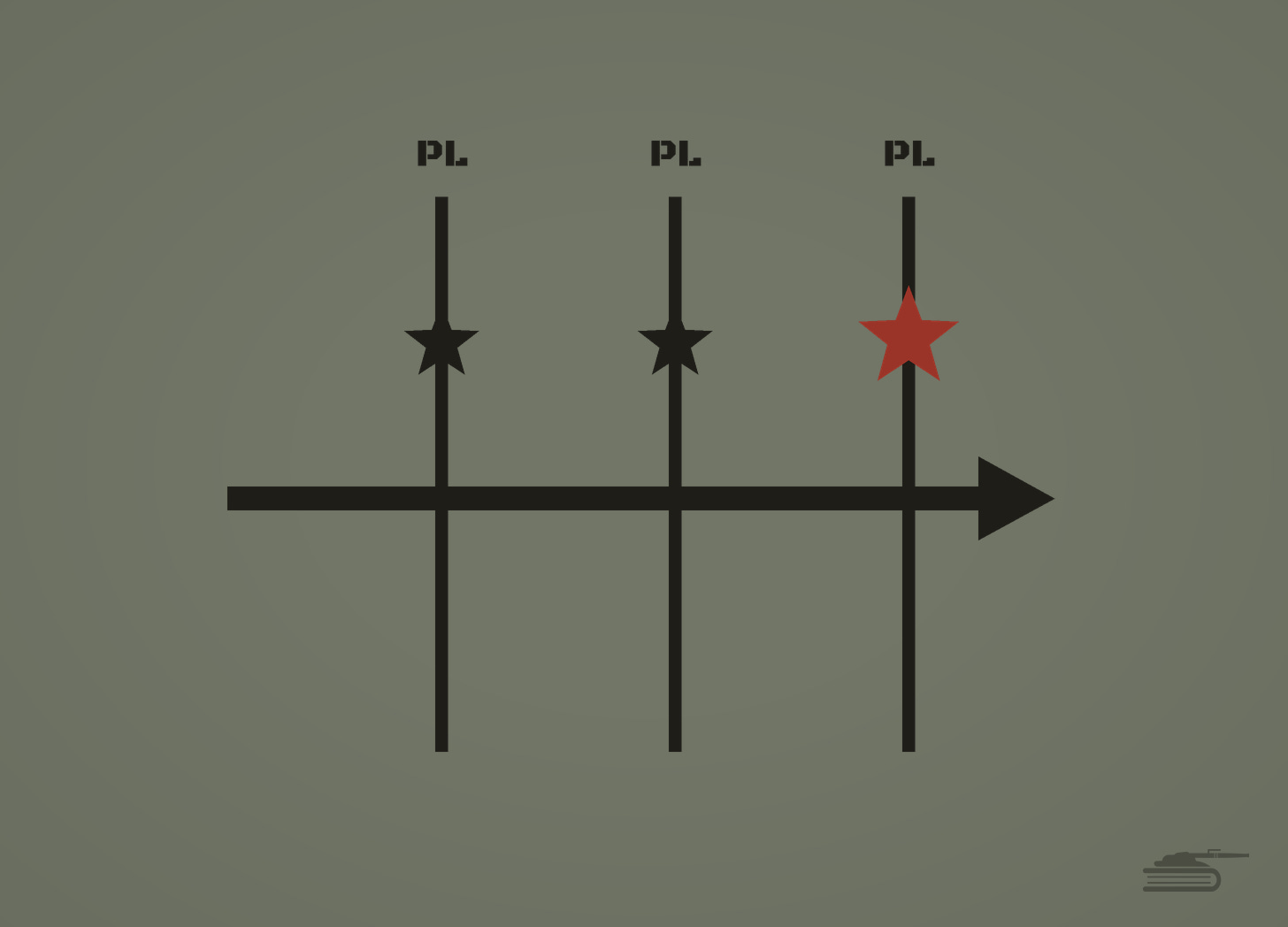
Communicate at the milestones, not on the calendar. The burst of communication happens when a line is crossed — and the big one triggers the full update.
The standard weekly or daily status meeting should be eliminated. That frees everyone’s calendar for work — and for the short, purposeful conversations that actually move it.
Leader-to-leader communication
Communication spreads through a team like a virus: it starts with one person and flows outward through the organization. If the first transmission is clear and comes from the leader, the strain is strong. The connecting file is the strong inception of a message between two teams.
The simplest and most reliable form is a direct connecting file from one leader to another. When a key event occurs, communicate directly and clearly with the key leaders of every affected team. In order of reliability, the channels run: in person, video call, phone, chat, and then email. The more effort the channel demands, the better the result — and the result of communication is how well the other party understands your message.
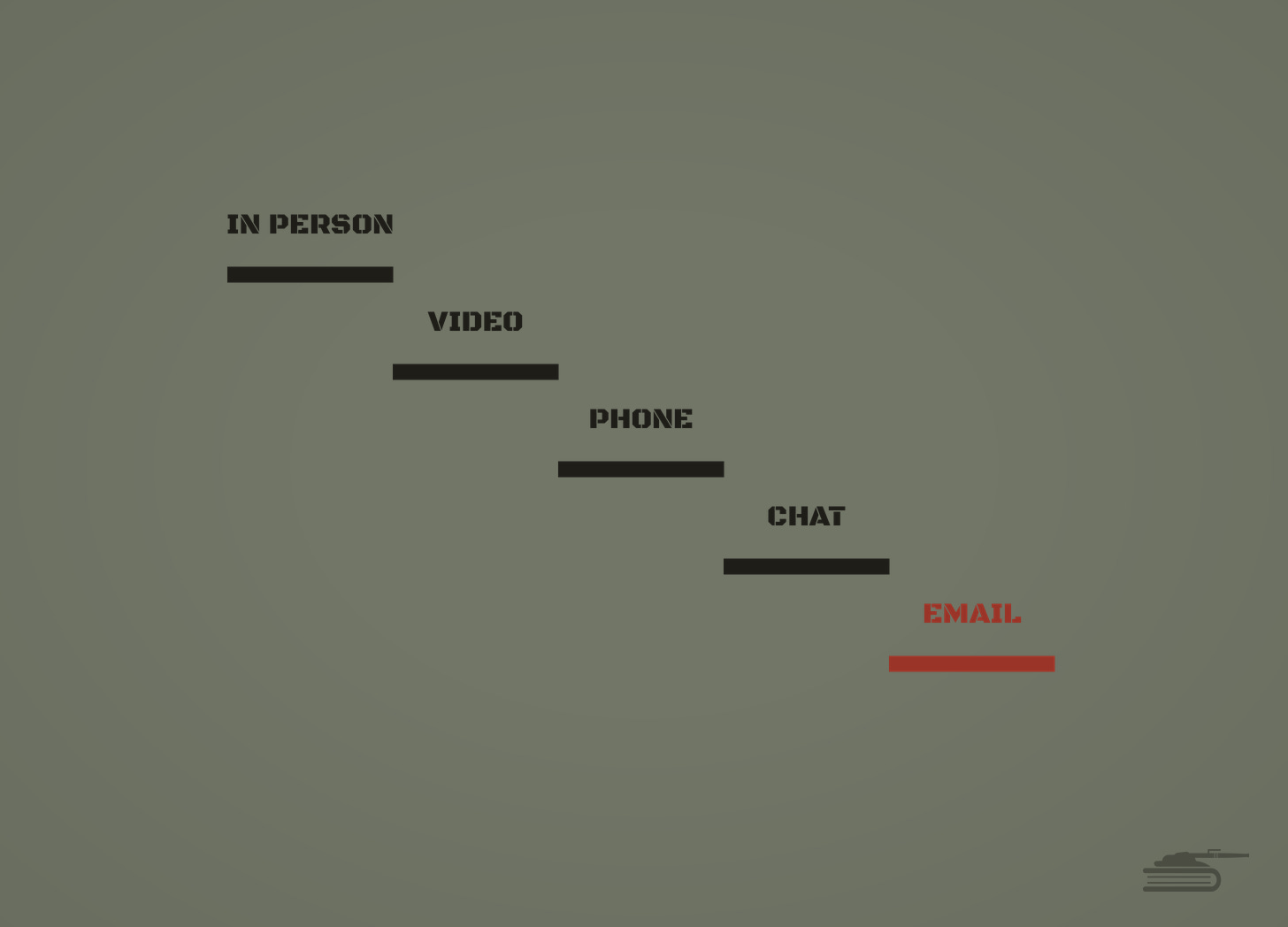
The dilution ladder. Every step down costs understanding. Send critical messages from as high on the ladder as you can manage.
A connecting-file meeting takes one of three forms:
One-on-one or small-group conversations when there is actually something to update — not a standing 30- or 60-minute weekly call. Discuss the relevant updates, and the meeting is over.
Group meetings of no more than five people to solve a specific problem that needs input from everyone.
Large group meetings for leadership to present future plans, get feedback on them, and update everyone on progress.
Almost all recurring meetings should be canceled to free that time, so people can call or meet individually for five to thirty minutes when there is a reason to. It is more efficient to update people quickly and purposefully when something has actually happened than to hold a meeting because the calendar says so. If you truly need a recurring meeting, scope it to one group of stakeholders, so you can pass exactly the information most relevant to them.
If you lead a hundred people, you can’t meet every person one-on-one to deliver a message. You can meet every leader and stakeholder — and make sure the message lands with them. Communicate through the smallest group possible or the largest group possible: an intimate discussion of five or fewer, or a mass update to all stakeholders at a town hall. It’s the medium-sized standing meeting in between that wastes everyone’s time.
The worst meetings are the weekly recurring ones where no one participates but the leader — and for some reason, those are the predominant meetings in the business world. Most people measure their effectiveness by how packed their calendar is, not by how many problems they solve.
One diagnostic to carry with you: when you see confusion in your team or your stakeholders, your communication has not been clear enough. That is the sign that a connecting file needs to be established.
In ideal conditions, one person looks another in the eye and tells them the message, and that person repeats it back to confirm understanding. The connecting file is the closest thing to ideal communication anyone can get.
Key takeaways
Deliver critical messages leader to leader, in person, with a read-back to confirm understanding.
Define the milestones that matter, then communicate at milestones — not on a calendar cadence.
Cancel the standing status meetings. Meet in the smallest group possible or address the largest, for minutes at a time, on purpose.
When you see confusion, that’s the signal: establish a connecting file.