


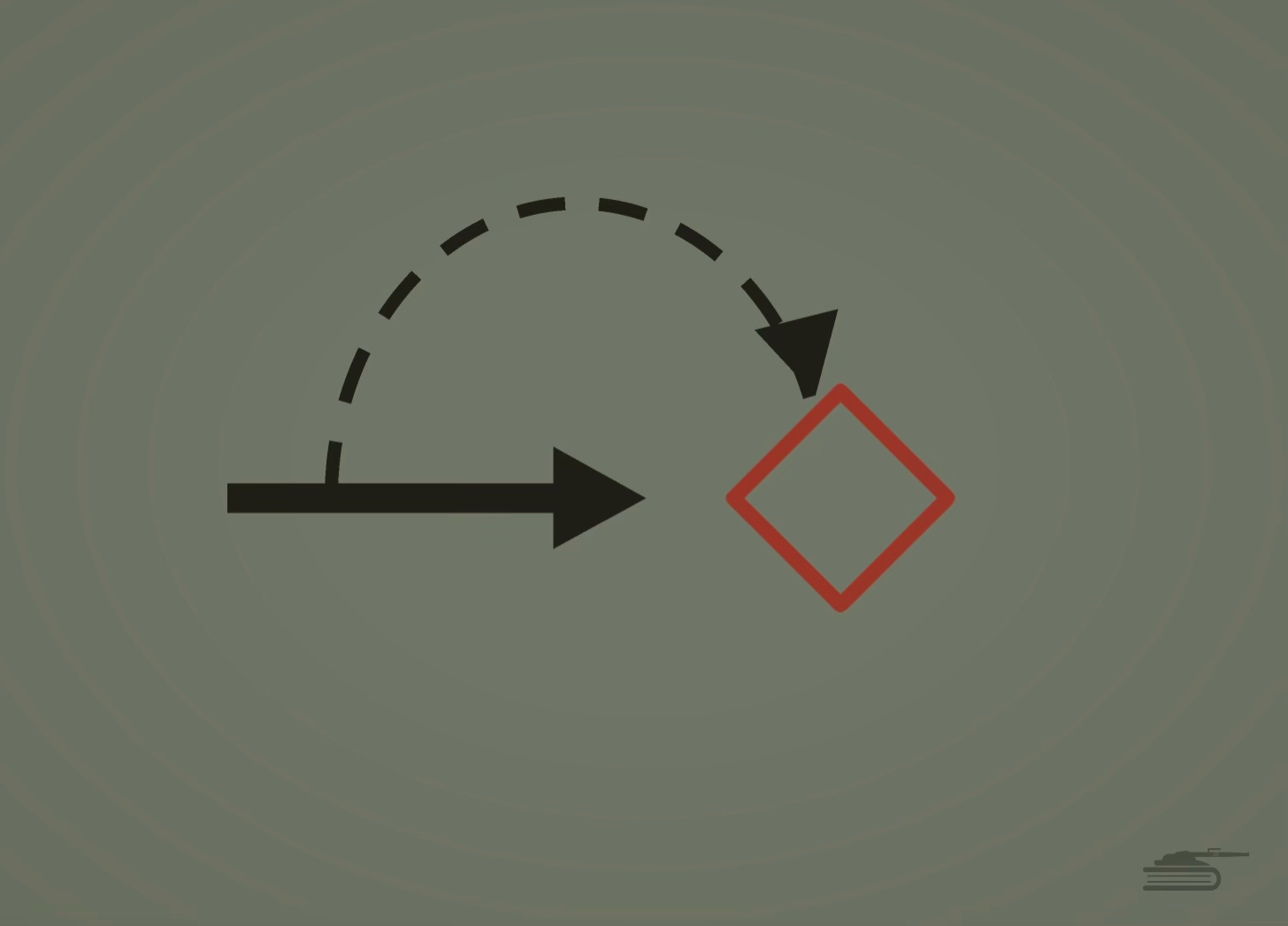
The combined arms dilemma: pressure from two different kinds of threat at once, so every choice the enemy makes is wrong.
Summary
A combined arms dilemma puts your competition in a bind with no good choices.
Find the two most important ways you compete, and pressure both hard enough to force your competition’s hand.
WAR
Imagine that you’re a newly recruited German soldier in WWI. You just rode a train for days to get to the western front. After a couple of weeks in the trench, you realize that your feet are constantly soaking wet and you barely get anything to eat. When you get an opportunity to sleep, it’s in a small dugout in the trench.
At dawn one morning, huge artillery shells start landing all around you. The explosions are the loudest things you’ve ever heard. Dirt and mud rain down on you after every blast. You see soldiers farther down the trench take a direct hit from a shell that tears their bodies to shreds. You dive into the deepest part of the trench. You feel like you’re lying there for hours waiting for the explosions to stop. Eventually they slow, and then they stop.
Right when they stop, heavy machine-gun fire starts ripping just above the lip of the trench. You don’t dare lift your head, but you know the Americans are attacking. You hear the shouts and the gunfire getting closer. The fire above your head is still too heavy to shoot back into. Then two enemy hand grenades land in the trench right next to you. You have nowhere to go, so you jump out of the trench to escape the blasts. As you climb, one of the grenades explodes behind you, peppering you with hot metal fragments. You stumble but keep climbing to get away from the second one. As you reach the crest of the trench, the horizon starts to open up. You see a US Marine fifty yards away, his rifle fixed on you. You see his muzzle flash as he fires. You’re now on your back, looking up at the blue skies above Belleau Wood, France, taking your last breaths.
That is a combined arms dilemma: putting your enemy in a no-win situation. Stay in cover and die from a bomb, or come out of cover and die from a bullet. The Marine Corps infantry is built from the ground up to create exactly this dilemma, and it’s written into our foundational doctrine:
Combined arms is the full integration of arms in such a way that in order to counteract one, the enemy must make himself more vulnerable to another. We pose the enemy with not just a problem, but a dilemma — a no-win situation. (MCDP 1, Warfighting)
Three concepts make the dilemma work: direct fire, indirect fire, and defilade.
Direct and indirect fire
At the highest level, there are two types of weapon systems:
Direct fire — rifles and machine guns. These fire bullets directly at the enemy. To affect the enemy with direct fire, you have to be fairly close — within a couple thousand meters — and exposed to them. If you can shoot them, they can shoot you. (A rare exception: you can actually arc machine-gun fire over small hills onto the enemy.)
Indirect fire — aircraft, artillery, rockets, mortars, and grenades. These drop bombs indirectly on the enemy. The most important property of indirect fire is that it can reach an enemy who is hiding behind cover — the bomb comes down on them, or is thrown in with them. You can also deliver it from much farther away. The trade-off: indirect fire is far less available, and usually has to be authorized by a higher command.
What is defilade?
At any moment, an individual enemy soldier is doing one of two things:
In defilade — hiding behind something that stops bullets: a hill, a wall, a tree, a bunker. This is closely related to “cover.” In defilade, they are only vulnerable to indirect fire, and they usually can’t — or don’t — shoot back, which makes them less of a threat to friendly troops. If our fire forces them into defilade, they are suppressed.
Exposed — out from behind cover, moving or returning fire. Exposed, they are vulnerable to both direct and indirect fire: a bullet or a bomb. Even a soldier in a good fighting position or bunker is barely exposed — but technically still exposed.
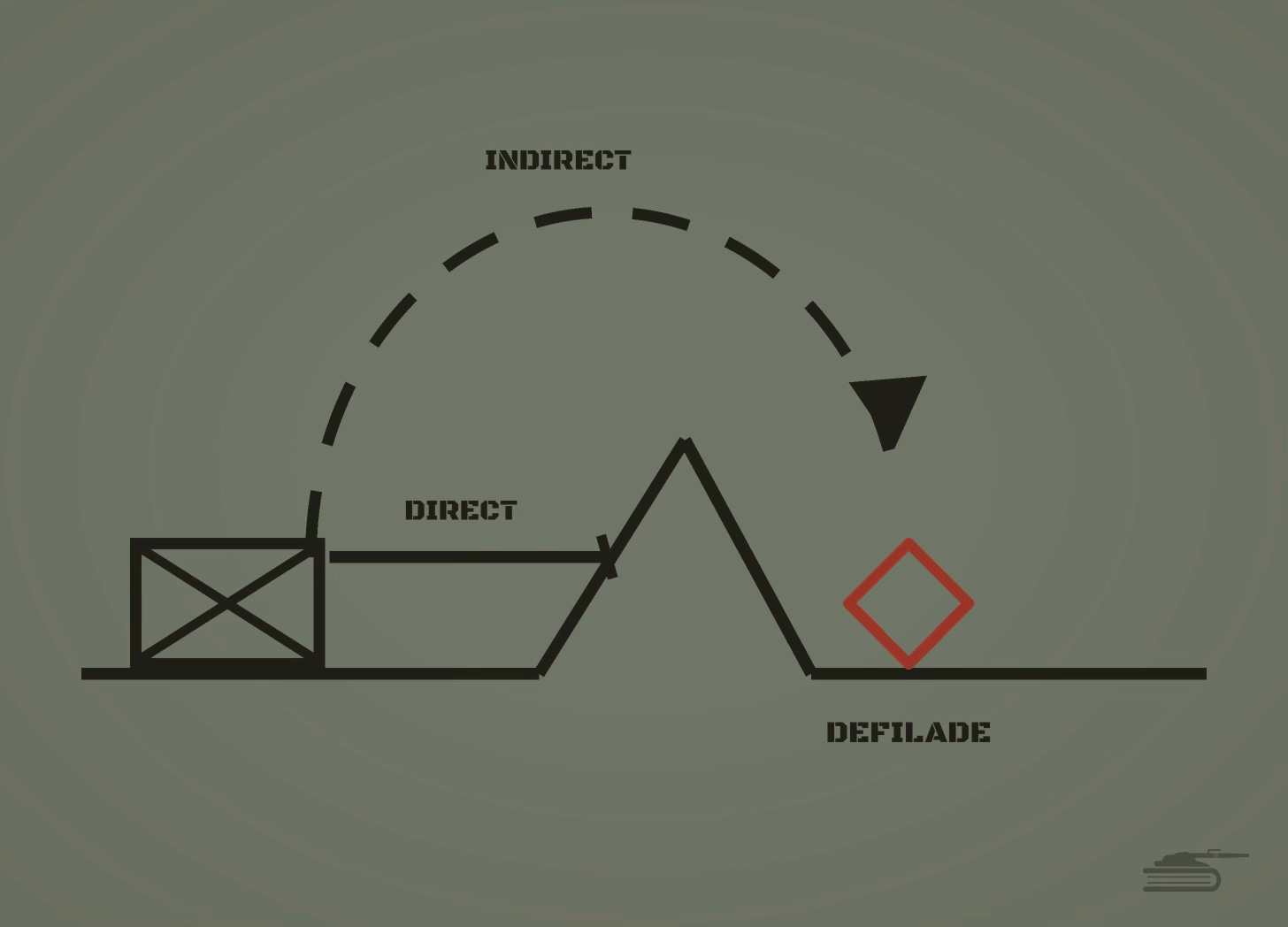
The dilemma in one picture. Behind the berm, the enemy is safe from bullets but not from bombs. Step out from behind it, and the rifle is waiting.
Implementing the combined arms dilemma
As a leader, it’s your job to coordinate your resources to put the enemy in a combined arms dilemma — and infantry units are equipped to do it at every level:
Regiment and division (thousands of Marines): jets, helicopters, rockets, artillery, and naval gunfire — heavy indirect fires used to break up and suppress large enemy formations.
Battalion (under a thousand Marines): 81mm mortars, anti-tank rockets, and heavy machine guns (.50-caliber and automatic grenade launchers) — scaled to the size of enemy a battalion is tasked to attack.
Company (a few hundred Marines): 60mm mortars, lighter rockets, and medium machine guns — capable against a platoon-sized enemy position.
Squad and platoon (a dozen to a few dozen Marines): grenade launchers, hand grenades, and individual weapons.
Even at the smallest level, two Marines in a buddy pair can create a combined arms dilemma: one Marine suppresses the bunker with his rifle while the other crawls up and throws a hand grenade into it.
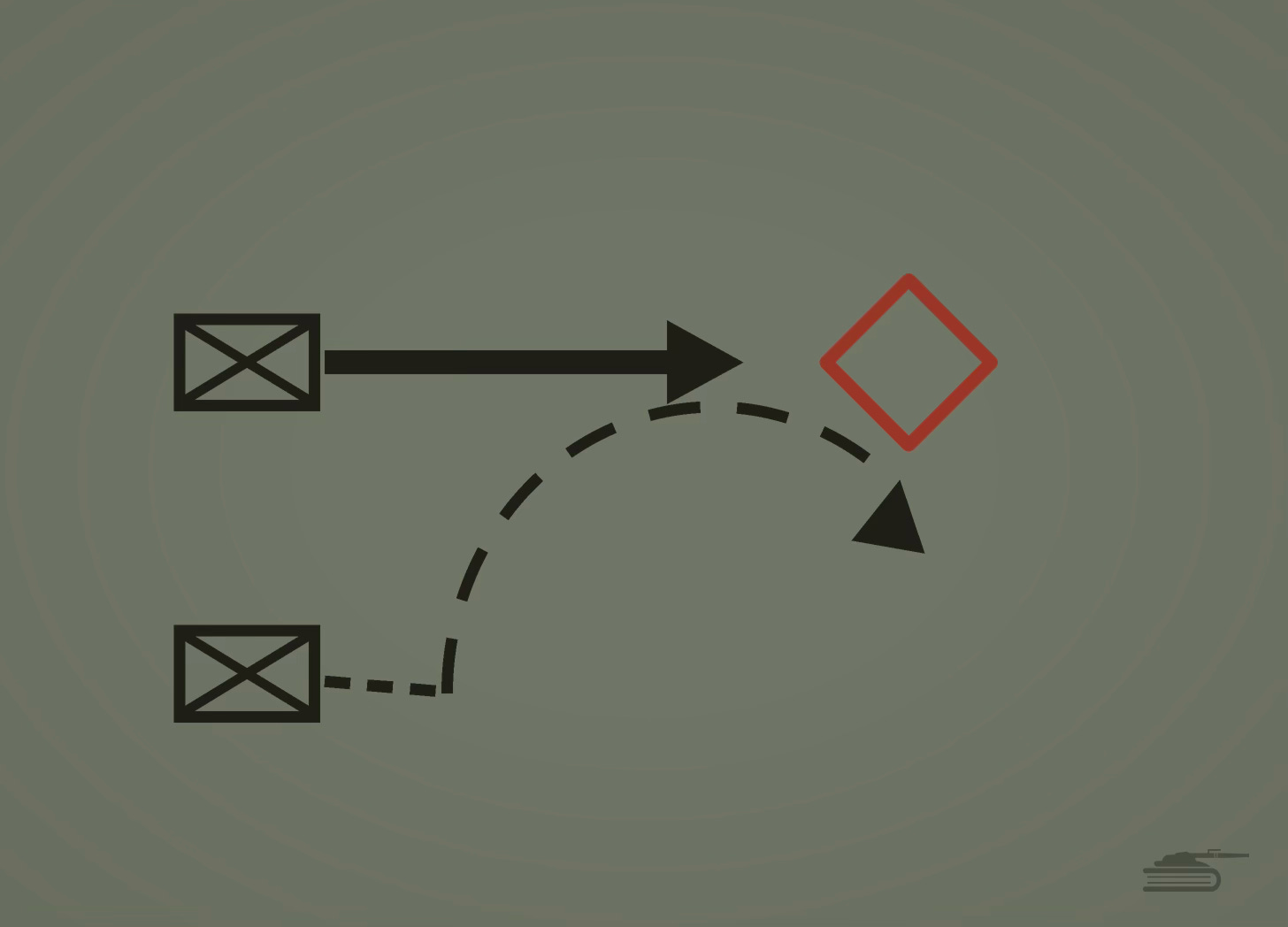
The smallest combined arms dilemma there is: one Marine pins the enemy behind cover, the other closes with the grenade.
From the division down to the buddy pair, the structure of every unit is built to put the enemy in a no-win scenario. They’ll either die from getting shot or die from getting blown up. Death is coming either way.
BUSINESS
There are no circumstances where you’ll be pinning an enemy down and lobbing high explosives at them. But the concept translates directly, in two main ways:
Put your competition in a bind by outperforming them in the critical areas of your industry.
Set up your teams so they can keep that pressure on with as little outside support as possible.
Strategy
Putting your competition in a bind is very possible in the business world. If you’re the best at a few of the things that matter most to your customers, you’ll excel in your industry. Two questions get you there:
What are the most important ways we compete? (Product, service, price, guarantee, customer experience, and so on.)
Is there a strategy that pressures our competition in more than one of those ways at once — forcing them into a hard choice?
The way you win is to put your resources toward beating the competition in at least the two most important ways. Coming out of those questions, you should be able to say something like:
“As a team, we are going to win at Thing 1 and Thing 2. Those are the two most important things we can deliver, and if we excel at both, our competition is in a bind.” That is your combined arms dilemma.
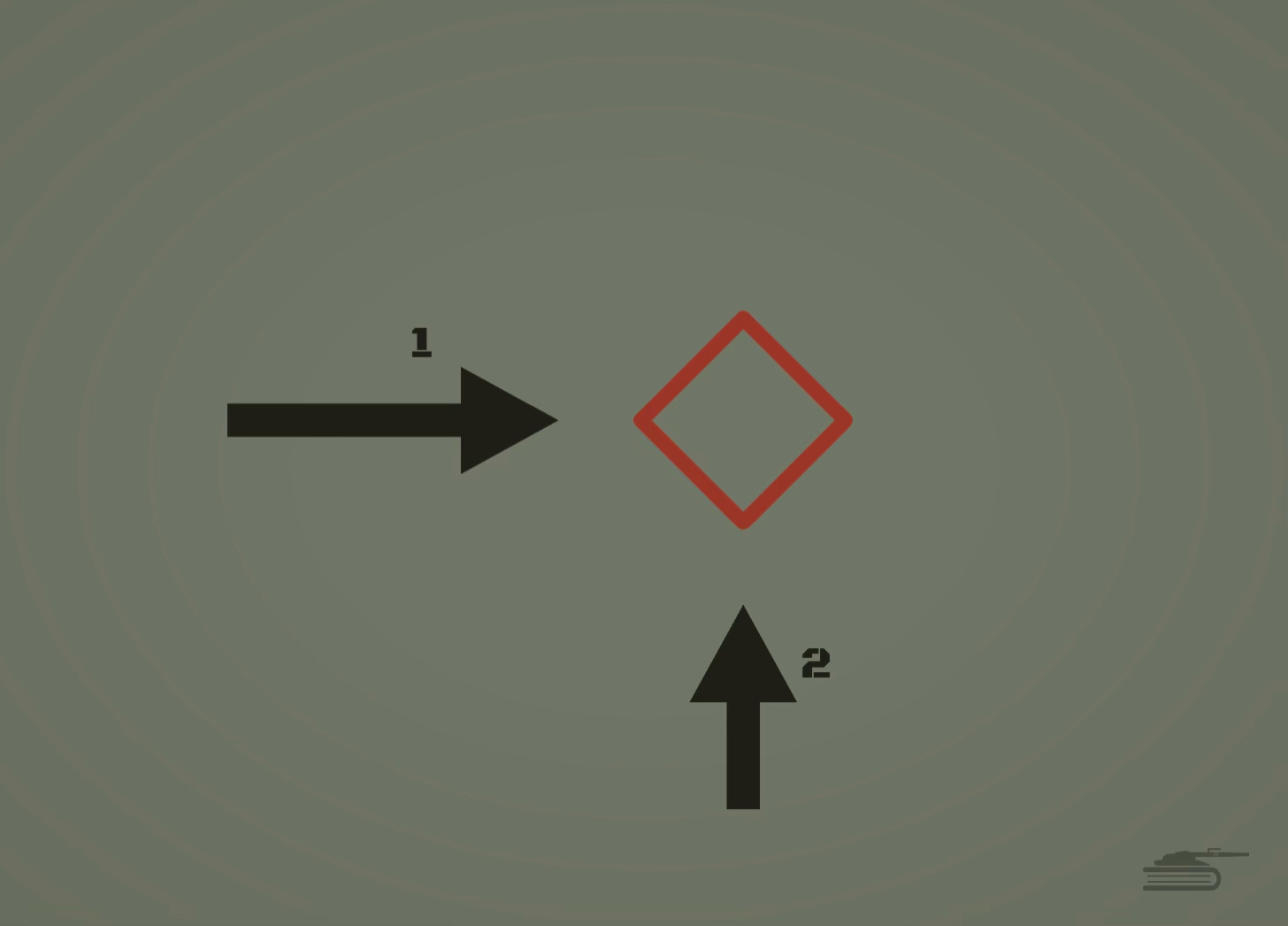
Pick the two things that matter most to your customer, and win both. Your competition now has to allocate perfectly on two fronts at once — and they almost certainly can’t.
If you’ve chosen the right combined arms dilemma for your industry, your competition has to allocate their resources perfectly or start losing ground. They almost certainly can’t — which is exactly why this concept is powerful. Keep improving on the few things that matter most to your customer, build your teams to execute on them, and the advantage compounds.
Team setup
Next, set up your teams with the mix of skills to make progress fast and keep the pressure on. The better a team can handle problems at the lowest level, under a single leader, the faster the work gets done. The question to ask:
Are our teams set up to execute our combined arms dilemma at the lowest level?
This is the equivalent of putting direct and indirect fire weapons on every team. In your industry, maybe that means product, merchandising, and sales working on the same team and reporting to the same general manager — the same logic as a Scrum team in software. A team built that way can support your highest-priority accounts with very little outside help.
Your teams will be most effective when they have the right skills on board, report to a unified leader, and that leader is responsible for executing the combined arms dilemma you’ve chosen.
Conclusion
Identify the things that matter most in your industry. Build teams capable of executing on them at the lowest level — and when a problem is too big for the team, they call in more assets, the same way a squad calls for mortars. Do both, and you’re no longer handing your competition problems to solve.
You’re posing them a dilemma.
References
United States Marine Corps. MCDP 1: Warfighting. 1997. Free PDF