

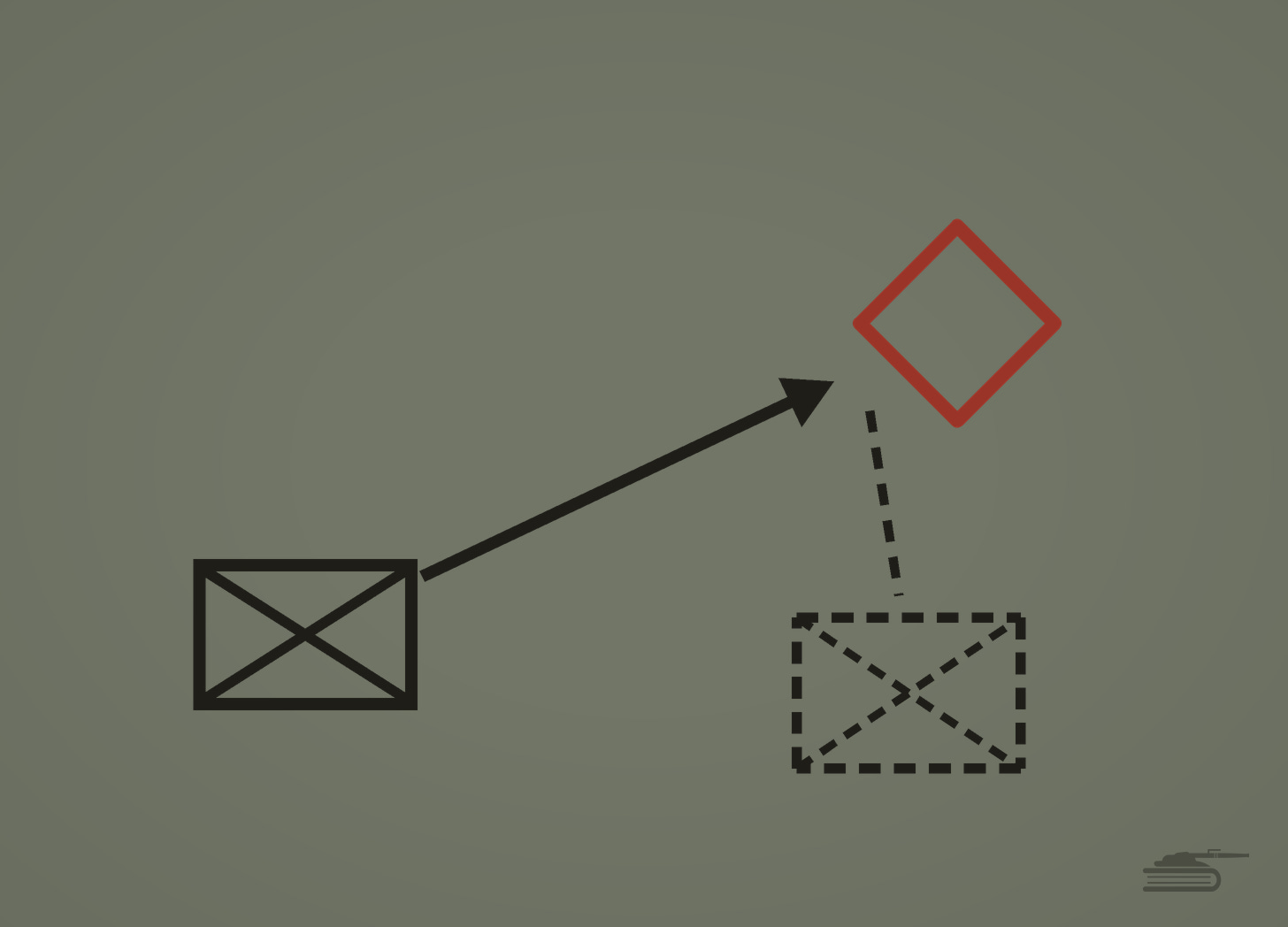
An asymmetric information environment: you see the enemy clearly, and the enemy sees a picture of you that isn’t there.
Summary
Aggressively and deliberately pursue the information that drives your team’s decisions.
The better your system for gathering, analyzing, and synthesizing information, the faster your decisions — and the more asymmetric your information environment becomes.
WAR
To make good decisions, it isn’t time that matters most. It’s information. If every relevant and accurate piece of information is in front of you, the correct decision is usually obvious. The problem is that we rarely have all the information we want, and getting it and making use of it takes a long time. The team that shortens the time it takes to gather and process information creates an environment that drives better and faster decisions.
In warfare, one of the biggest competitive advantages you can hold is an asymmetric information environment — which is just a fancy way of saying you know more relevant information than your enemy does.
Economists have a term for it: information asymmetry, one side of a deal knowing more than the other. The idea is important enough that it won three economists the Nobel Prize in 2001, mostly for showing how it warps markets: the used-car seller knows the car is a lemon, the buyer doesn’t, and the whole market bends around that gap. Economics discovered it in markets.
As usual, civilian economists and business leaders are discovering something combat leaders have been using for thousands of years. Sun Tzu put it plainly: “All warfare is based on deception.”
In warfare there are essentially no rules governing information, so everything is on the table. The two main strategies: gather as much accurate information about your enemy as possible, and give your enemy as much bad information about you as possible. The ideal is a completely clear and accurate picture of the enemy’s position while they hold a totally inaccurate picture of yours — and are confident in it.
D-Day
One of the greatest information campaigns in history was run in the months before D-Day. The Allies fought both halves of the information war at once: one effort to see the Germans clearly, and a second to make the Germans confidently wrong.
The first half was seeing the enemy clearly. By 1944, the codebreakers at Bletchley Park had broken the German Enigma ciphers — a program called Ultra — and the Allies were reading much of the German military’s own command traffic. Layer photo-reconnaissance flights and reports from the French Resistance on top of that, and Allied planners held an accurate, current picture of the Atlantic Wall: which defenses were strongest, where the reserves sat, what the German command believed.
The second half was making the Germans confidently wrong. That was Operation Fortitude. The Allies built a phantom invasion force, the First U.S. Army Group (FUSAG), aimed at the Pas de Calais — the shortest hop across the Channel and the militarily obvious choice, which is exactly what made the lie believable. They gave it inflatable tanks, plywood landing craft, scripted radio traffic, and, as its commander, George Patton, the one general the Germans most expected to lead the invasion. Then they delivered the story through the enemy’s own trusted channels: British intelligence had captured or turned essentially every German spy operating in Britain, so the reports flowing back to Berlin were written by the Allies. One double agent, codenamed Garbo, fed the Germans an invented network of sub-agents so convincingly that they awarded him the Iron Cross.
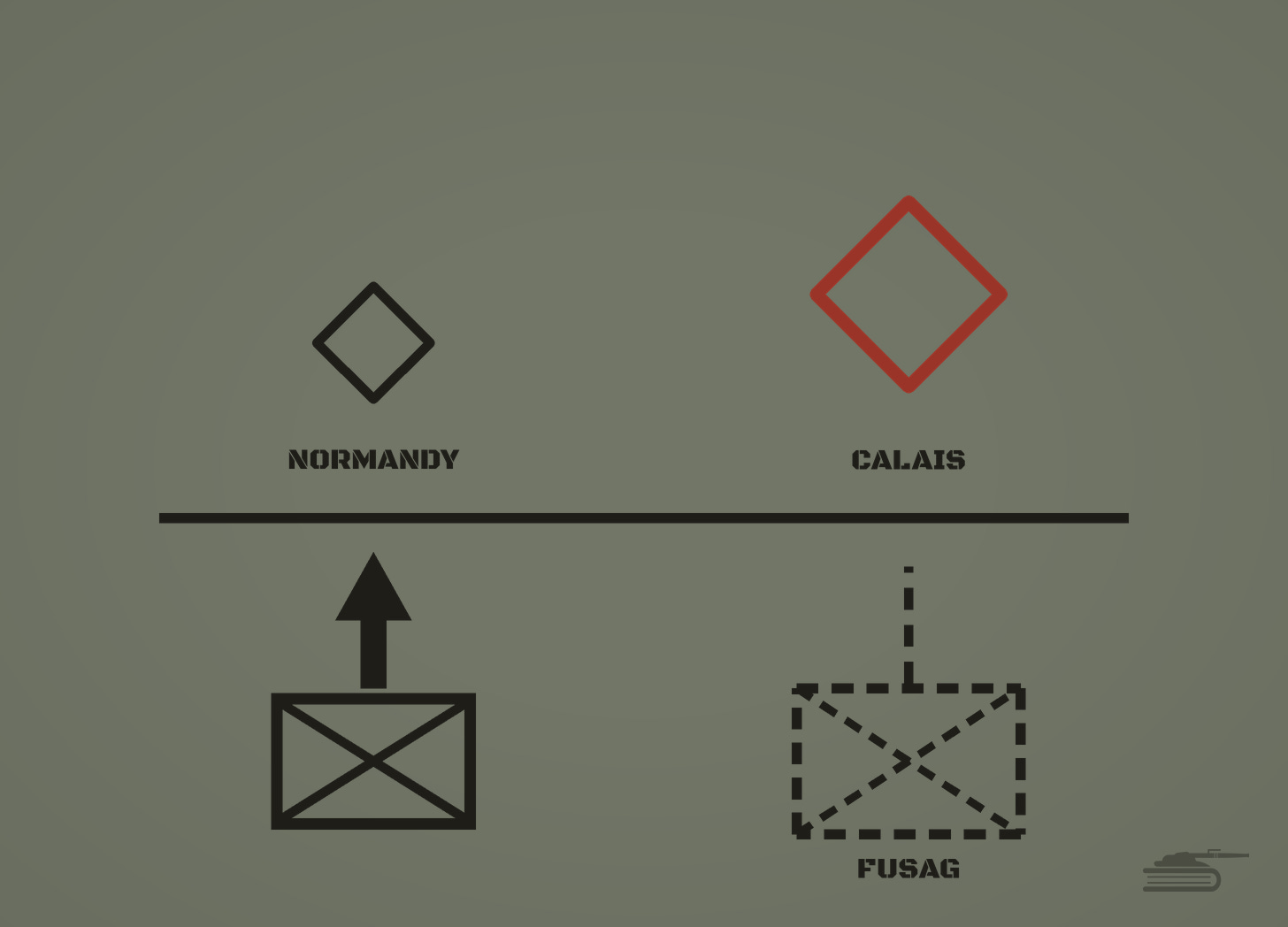
Both halves at once. The phantom army (FUSAG) points at Calais, where the German 15th Army waits for Patton. The real landing goes to Normandy.
The two halves fed each other. Because the Allies were reading German traffic, they could watch their own lie land: the decrypts showed the German 15th Army holding at Calais, waiting for Patton.
On June 6th, the Allies landed at Normandy. The Germans held their strongest force at Calais for weeks afterward, convinced Normandy was the diversion and the real invasion was still coming. It never came. That is a fully asymmetric information environment: a clear and accurate picture of your enemy, while your enemy holds a false picture of you and is confident in it. The Allies didn’t just know more. They knew more, they knew the enemy knew less, and they made every D-Day decision from that high ground.
Tie to the OODA loop
Information asymmetry ties directly into the OODA loop. When I studied the OODA loop, one of my main takeaways was how important the Observation step is. It is the first step, and it feeds every step after it. Gather the relevant information and orient on it, and the decision and the action become obvious. Look at the wrong information — or stop actively gathering it — and the rest of your decision cycle will be wrong, or much slower than your enemy’s.
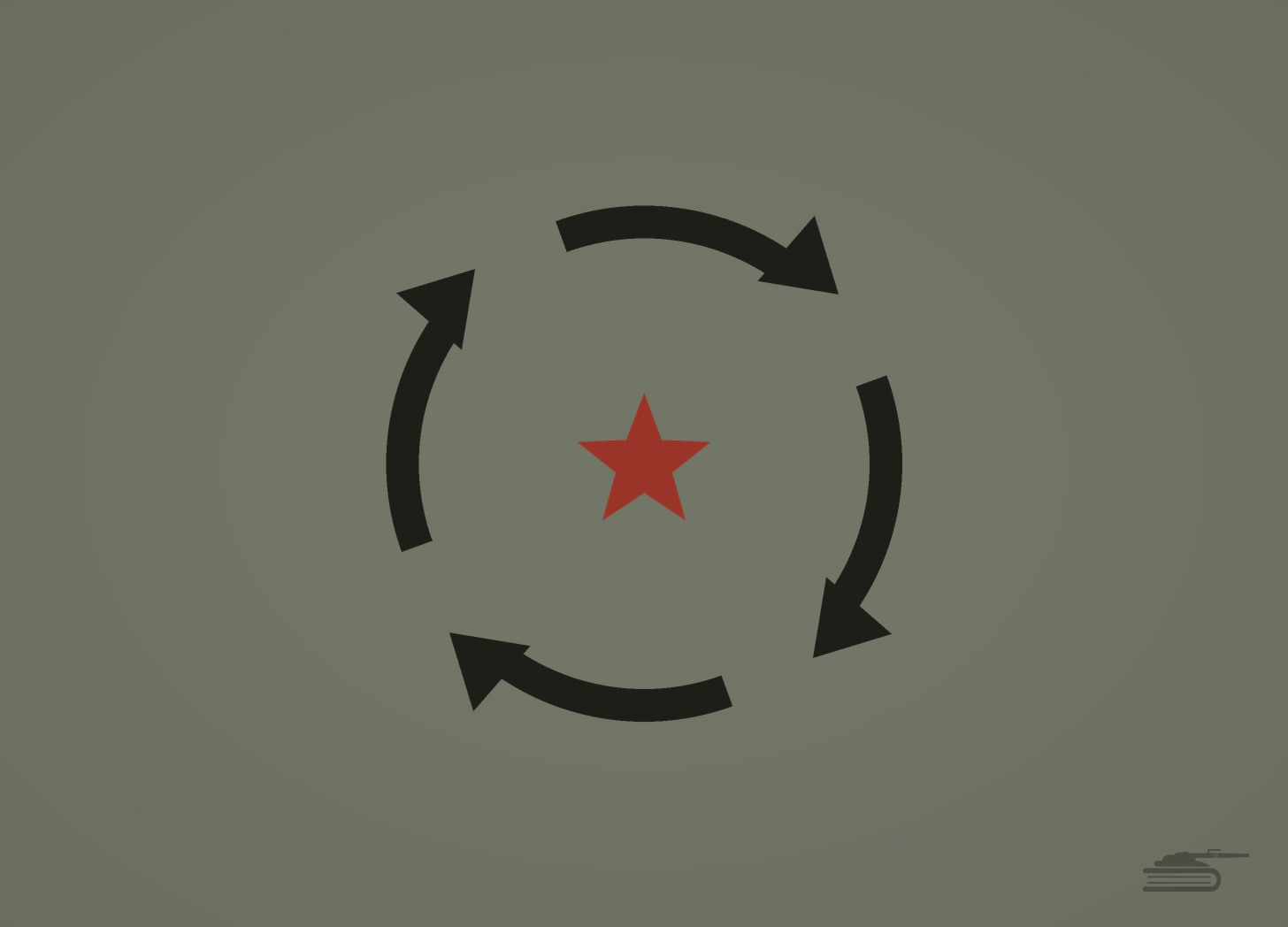
Observe is the step that feeds every other step. Win there, and the rest of the loop turns faster than your enemy’s.
What this means is that in the Observation step, you are trying to produce an asymmetric information environment. You do that by keenly observing and gathering the information you need to drive the next decision, so you can out-cycle your competitors. The more effectively you gather information and then process it, the better and faster your decisions will be.
The key to out-cycling your enemy’s decision cycle is to deliberately create an asymmetric information environment.
BUSINESS
A business leader is paid to make good decisions. Those decisions allocate resources for months and years, and if the allocations are wrong — pulling resources away from a product or an entire service line — they can literally bankrupt the business. If a leader’s job is to make a few key decisions, they need to make them with accurate and relevant information.
In the business world you can’t do what the military does and relentlessly lie and cheat for an advantage. What you can do is process drastically more information than your competitors — information deliberately and aggressively pursued to make the most accurate decisions possible.
Most businesses spend much of their time fighting internal fires with siloed data that can’t be connected into real insight. If you can figure out what truly drives success in your company, then gather the information behind the decisions that drive that success, and analyze and synthesize it faster than your competitors, you make better and faster decisions than they do.
You create an asymmetric information environment by being extremely deliberate about how you gather the data that drives your most important decisions. Constantly ask what information would make the next decision obvious — then relentlessly attack gathering it.
How I’m using this
In my own business, I’ve been building a database with as much relevant data as I can possibly get. This is the data that drives every decision in the company. If I can outpace my competitors at analyzing it and synthesizing it, and let it drive rapid and accurate decisions, I will out-cycle their OODA loop.
My current data sources:
Google Ads API
Google Analytics API
QuickBooks Online API
CRM data
Twilio phone data
Competitor intel: captures of websites, ads, and landing pages
Google Search Console
Compliance data
DataForSEO
Semrush
That is essentially a comprehensive list of the data my business produces. The breadth is deliberate: I collect everything so the AI can search everywhere, but I aim it with the specific decision questions I need answered to make my next strategic move.
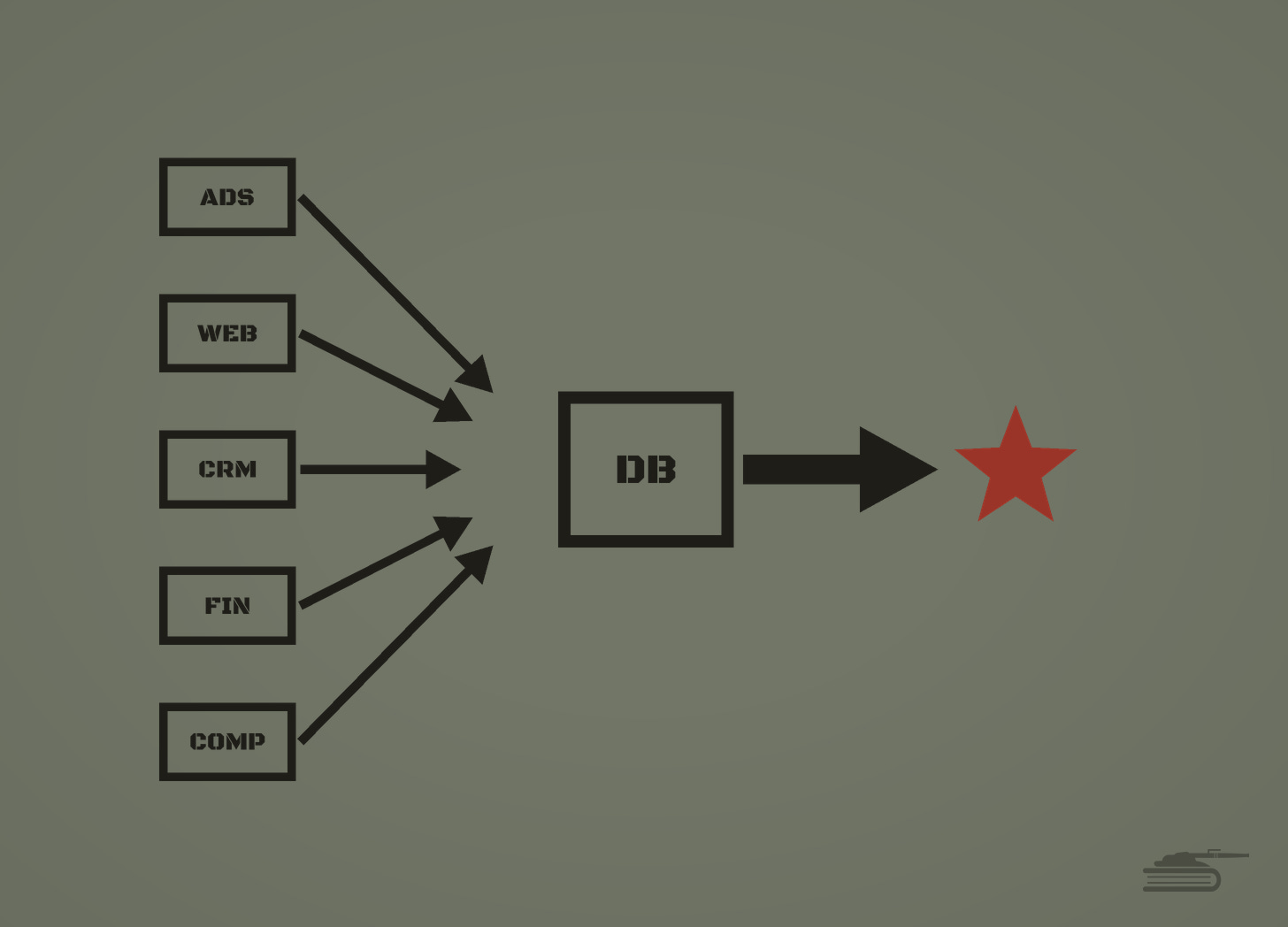
Massing, with data for arrows: every source converges into one database, and one decision comes out the other side.
With that database in place, I give a frontier AI model keys to it and ask it to analyze and synthesize information across the entire company and compare it to my competitors. That has drastically increased my ability to orient on the most important information for my next most important decision.
The first thing the AI did was link every Google Ad to my CRM to confirm which ads produce actual converted clients. Then it analyzed the copy of those ads and the structure of their landing pages against my competitors’, and immediately improved our landing pages. I would never have had the skill or breadth of knowledge to analyze and synthesize that information the way AI can. The greatest capability of AI will be creating an asymmetric information environment for the decision-makers who let it.
Processing data to drive decisions is what creates an asymmetric information environment in business.
Key takeaways
Good decisions run on information, not time. The team that gathers and processes it fastest decides best.
Win the Observation step and the rest of the OODA loop turns faster than your competitor’s.
You can’t deceive like the Allies did, but you can out-collect and out-process. Decide what questions matter, then build the system that answers them.
References
Macintyre, Ben. Double Cross: The True Story of the D-Day Spies. Crown, 2012. Link
Hesketh, Roger. Fortitude: The D-Day Deception Campaign. Overlook, 2000. Link
Boyd, John R. A Discourse on Winning and Losing. Edited by Grant T. Hammond. Air University Press, 2018. Free PDF
Coram, Robert. Boyd: The Fighter Pilot Who Changed the Art of War. Little, Brown, 2002. Link
United States Marine Corps. MCDP 1: Warfighting. 1997. Free PDF